User Role Permissions

Entry Management
Create, edit, share and assign text entries: all user roles

Text Entries overview
Depending on the collaboration settings. Independent of the collaboration setting, the admins see all the entries, managers see all their team’s entries and members see their own entries.

Templates
Create, read and use templates: all user roles
Update templates: Admin – all templates, Managers – Team’s templates, Employee – Your own templates

Set Corporate Terminology
Admins only

Usage reporting
Admin: Company level
Manager: Team level
Employee: Personal level

User Management
Invite new users: All user roles
Assign and remove team members: Admin and Manager of the team
Change user roles: Admin

Account Management
Collaboration settings: Admin
SSO settings: Admin
Reporting settings: Admin
Inclusivity target settings: Admin

Customizing Collaboration Mode

As an Admin, you can align the collaboration settings to your organization’s needs. Here’s a step-by-step guide on setting the collaboration mode:

1. Access Account Settings

Click on your avatar located at the right upper corner of the screen to access account settings.

2. Inclusive Writing Section

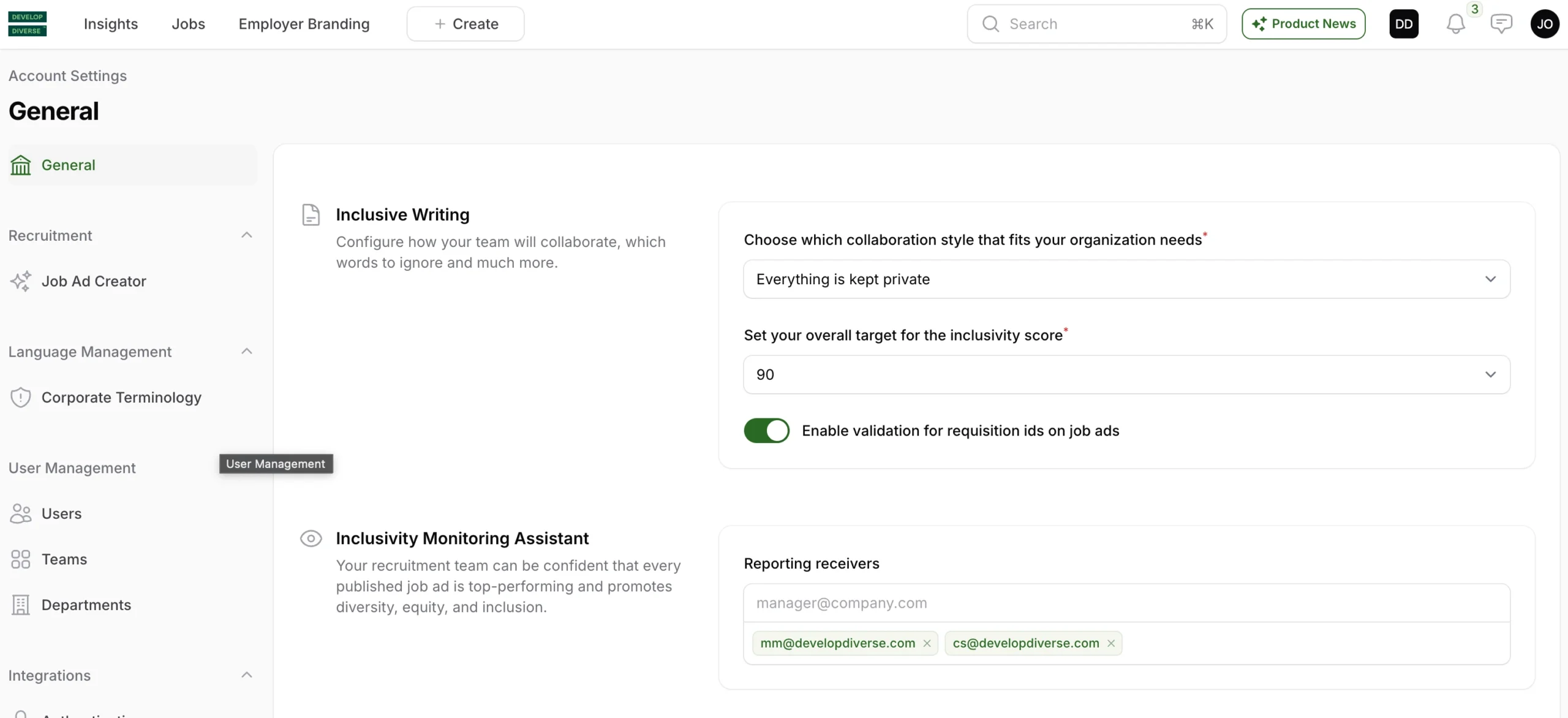
Within the account settings, locate the “Inclusive Writing” heading.

3. Choose Your Collaboration Style

Under the “Choose which collaboration style fits your organization needs,” you have three options:

  • Everyone in the organization can collaborate: All entries are visible and open to every user on the platform.
  • Collaboration happens only in teams: Entries belonging to a team are visible and open exclusively to the team members.
  • Everything is kept private: Everyone, except for the manager and admin, can see only their own entries.

Select the option that best suits your organization’s workflow and communication preferences.

How to collaborate on a text entry

Invite your colleagues to Develop Diverse to work together on a text entry.

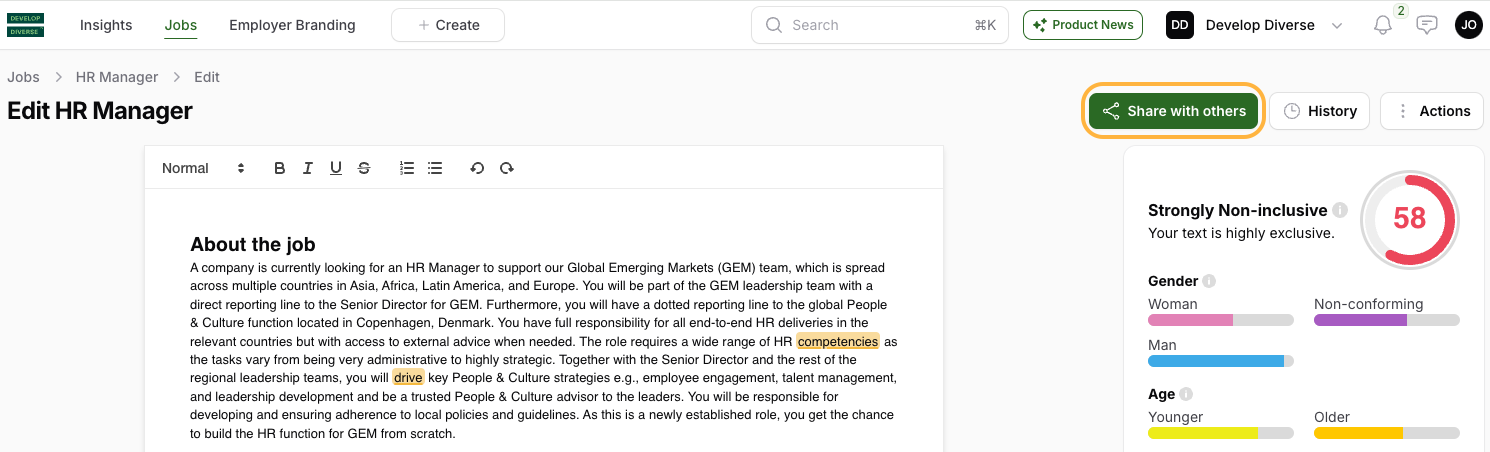
Once you’ve created a text entry, follow these simple steps to share it with others.

Click on the “Share with others” button at the top of the editor.

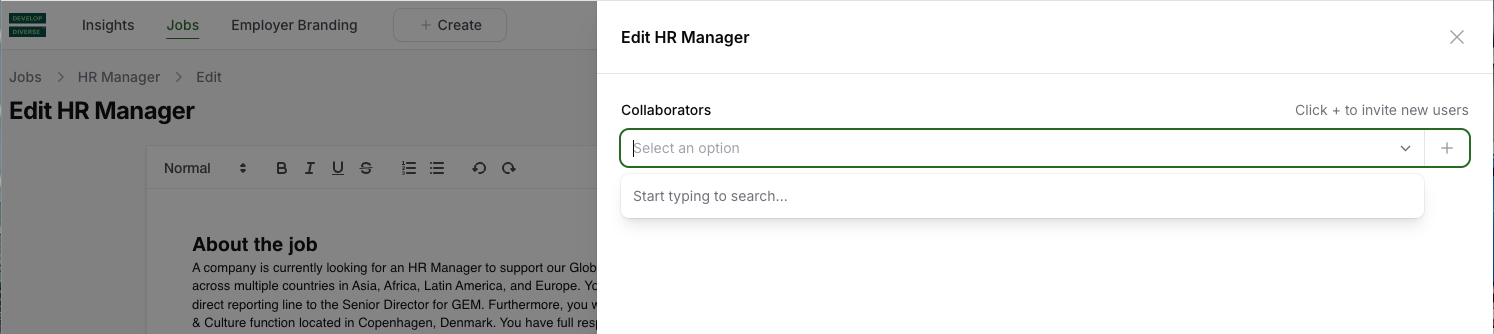
Collaborators are users with access to the text entry and editing rights. Add collaborators by searching for users in the field or adding a new colleague by entering their email address.

New collaborators receive email notifications and alerts upon being added.

SAML Authentication

Follow the below steps  to successfully enable SAML 2.0 authentication.

Notice: SSO & SAML requires the Professional plan. Please contact support if the Authentication tab is not enabled in your Account Settings.

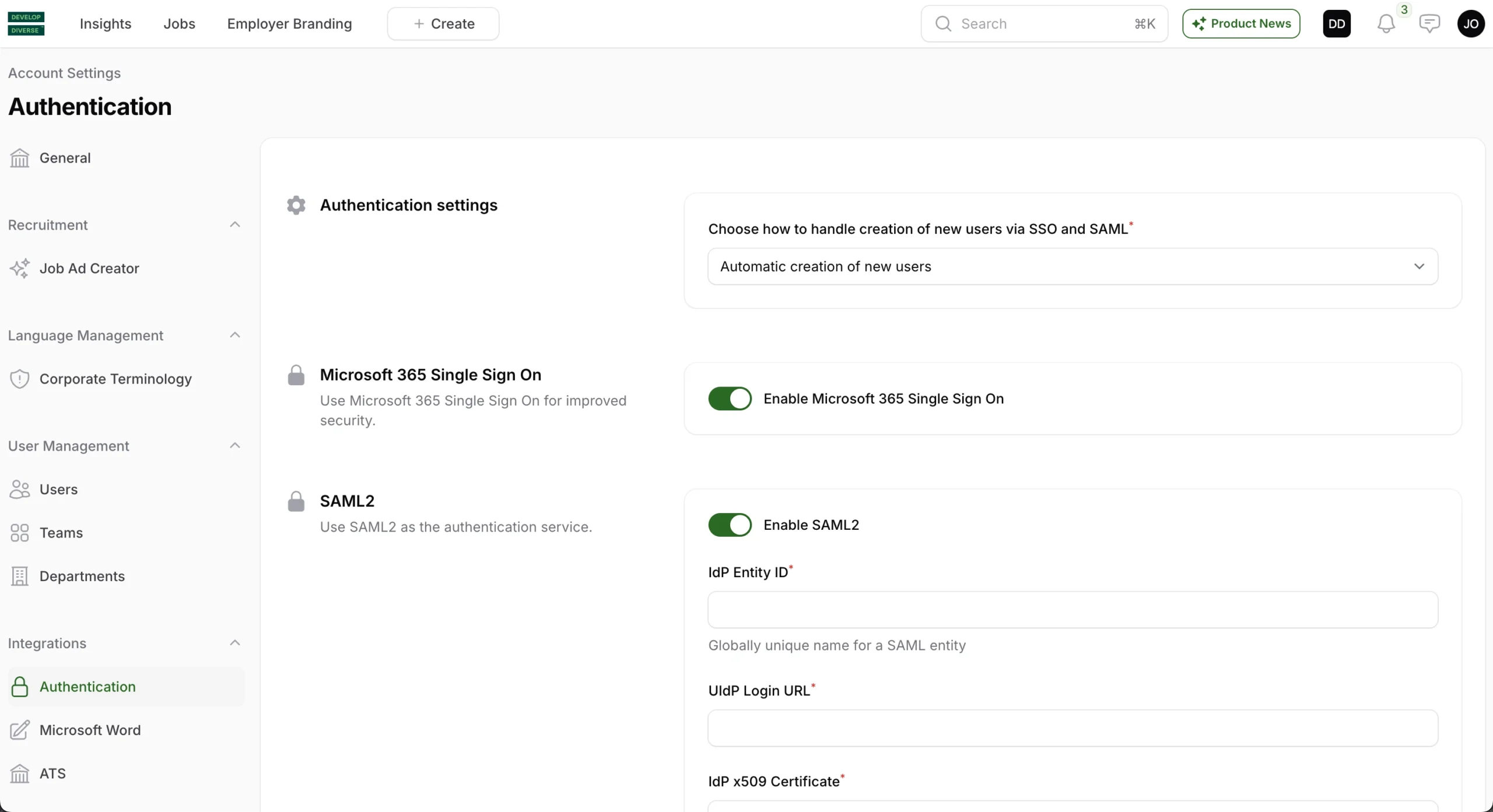
Step 1: Activate SAML based authentication in Develop Diverse

The following can only be done by an Admin

  1. Access Account Settings via your avatar in the right upper corner.
  2. Choose the Authentication in the left navigation
  3. Activate the toggle “Enable SAML 2”

Step 2: Update with Identity Provider information

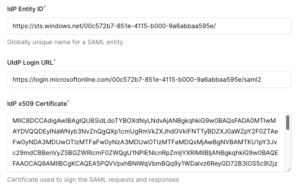
Your Security & IT team should provide you with Identity Provider information to input into the Account Settings for SAML 2.0.

  1. Input Identity Provider information
    1. Entity ID
    2. Login URL
    3. Certificate
  2. Click on the button “Save changes” at the bottom.


The following image is an example of what these information would look like:
Step 3: Insert SAML credentials within your Identity Provider

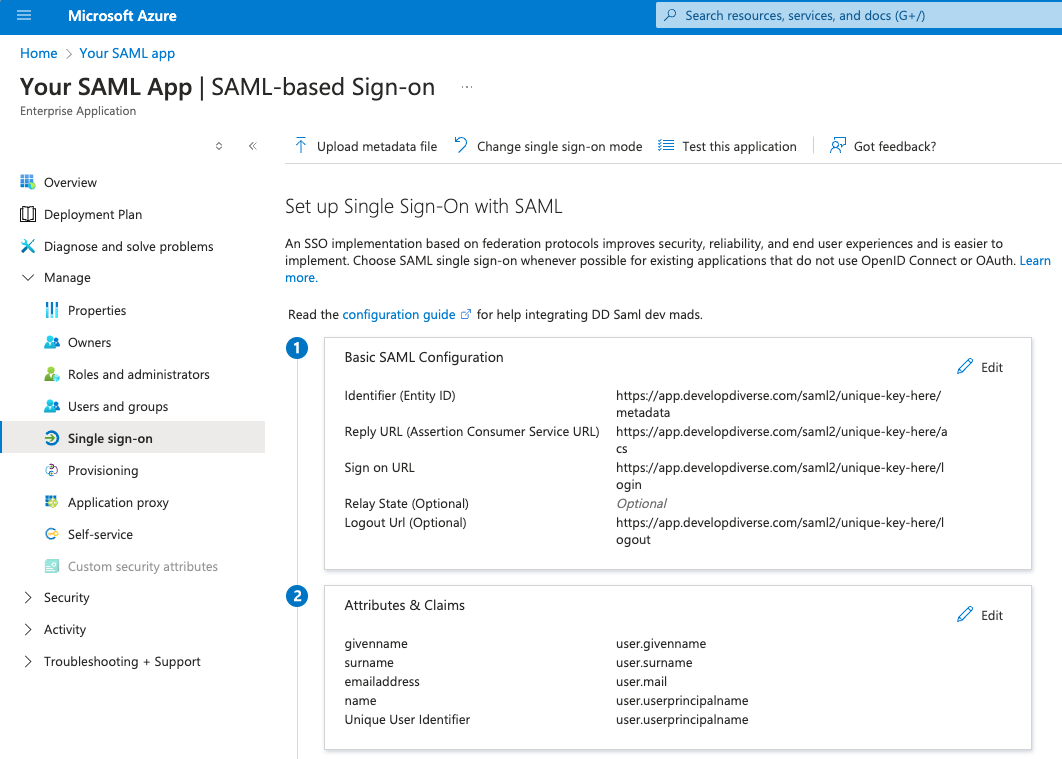
Once the information has been saved, Develop Diverse will generate unique SAML configurations that your Security & IT team should enter into the Identity Provider to finish the setup.

Identifier (Entity ID) https://app.developdiverse.com/saml2/unique-key-here/metadata
Reply URL (Assertion Consumer Service URL) https://app.developdiverse.com/saml2/unique-key-here/acs
Sign on URL https://app.developdiverse.com/saml2/unique-key-here/login
Relay State Should be left blank
Logout Url https://app.developdiverse.com/saml2/unique-key-here/logout


If you are using Microsoft 365 Azure AD as Identity Provider, then the section “Basic SAML Configuration” needs to be updated.
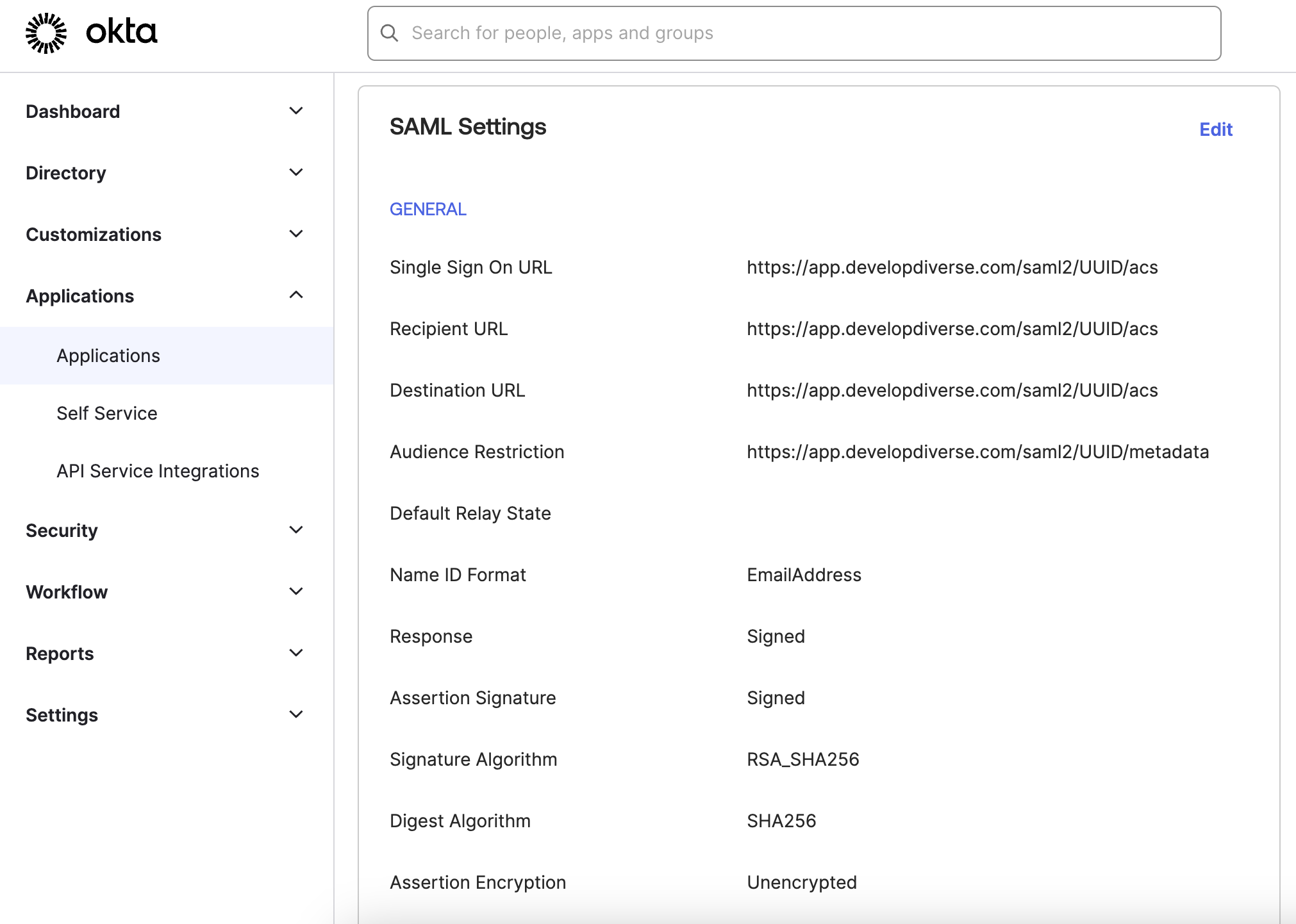
If you are using Okta, you will have to setup the SAML settings as shown in below image.
The claims in Okta, claims should be the following:
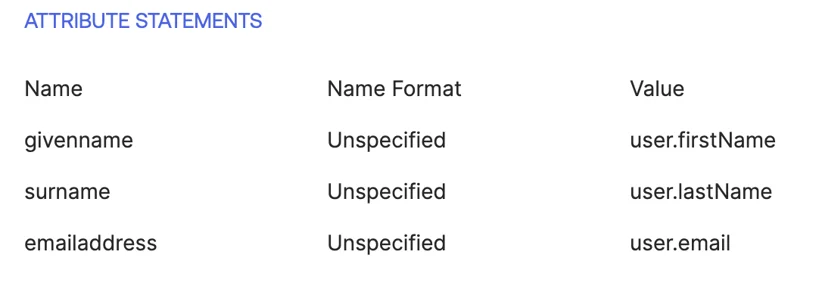
Supported Claims

  • givenname user.givenname
  • surname user.surname
  • emailaddress user.mail
  • displayname user.displayname